The Sacramento County Court is the primary legal authority that hears and resolves cases for residents, property owners, and organizations across Sacramento County. It plays a central role in the Sacramento court system and operates within the structure of the California judicial system. The court handles disputes, enforces state laws, and supports lawful decision-making at the county level. It serves as the first point of contact for many legal matters, from filings to hearings. Through its structured process, the court helps maintain order and public trust in local justice.
The Sacramento County Court functions through the Superior Court of California, County of Sacramento, which oversees civil, criminal, family, probate, juvenile, and traffic cases. This county judiciary applies California statutes and court rules through scheduled hearings, trials, and motions. Judges, clerks, and courtroom staff manage records, calendars, and official filings each day. Court locations across Sacramento County match cases with proper jurisdiction, which supports timely case movement and procedural clarity. This system allows the Sacramento court system to deliver consistent rulings and transparent court operations.
What about the Sacramento County Court System?
The Sacramento County Court System serves as the main trial-level forum for legal matters in the county. It operates through the Sacramento County Superior Court, a core part of the judicial branch of California. The Sacramento court system functions within California’s statewide structure, yet focuses on local disputes and enforcement. Through this role, it connects state law with everyday legal needs across Sacramento County.
Role of Sacramento County Court Within California
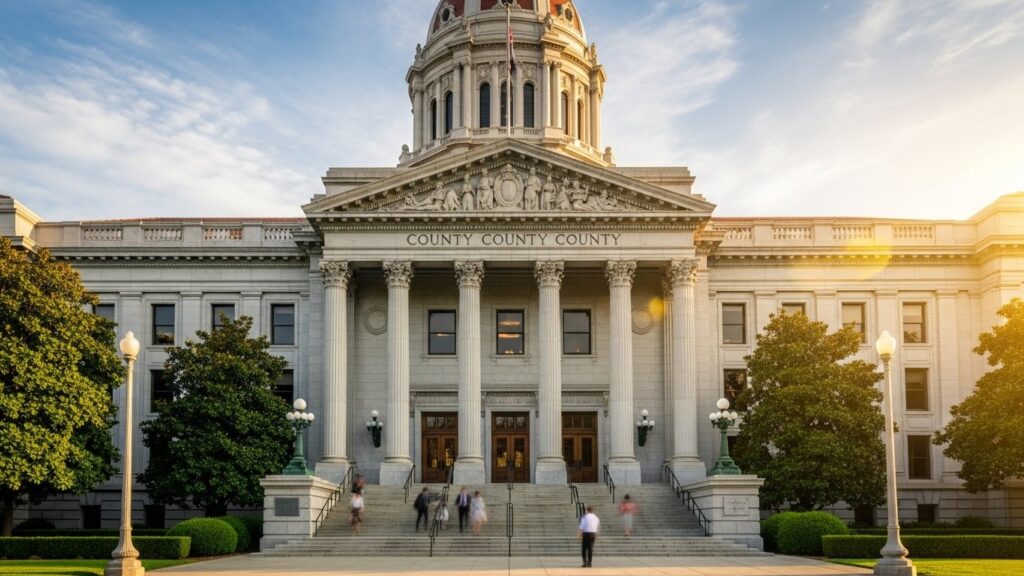
The Sacramento County Superior Court stands as a California trial court, which means it hears cases at their starting point. It handles filings, hearings, trials, and rulings that affect residents, families, and businesses within the county. Judges apply state statutes and constitutional rules, keeping decisions consistent with California law.
At the state level, California maintains a unified judicial system. Sacramento County fits into this system as one of 58 county-based superior courts. Appeals from Sacramento County move to the California Courts of Appeal, and in limited cases, to the California Supreme Court.
This structure keeps legal standards uniform statewide while letting courts address local needs.
Key functions include:
- Applying California law at the county level
- Managing jury trials and bench trials
- Issuing rulings, orders, and judgments
- Supporting due process within the local judicial system
According to the Judicial Council of California, superior courts resolve millions of filings each year, making them the backbone of the state’s justice process.
County Court vs. State Judicial System Authority
A county court does not create laws or set statewide policy. Its authority comes from the state judicial system, which grants trial courts the power to hear and decide cases. Sacramento County does not run a separate court outside California’s framework; it operates inside it.
The trial court authority and jurisdiction of Sacramento County Superior Court covers:
- Criminal cases such as misdemeanors and felonies
- Civil disputes involving contracts, injuries, or property
- Family law matters like divorce, custody, and support
- Probate cases covering estates, trusts, and guardianships
This clear division keeps the process efficient. State-level courts focus on review and interpretation. County trial courts focus on fact-finding and decisions at the local level. As a result, residents receive timely rulings close to where disputes arise, reinforcing trust in the Sacramento court system.
Search Sacramento County Court Cases & Records
Searching Sacramento County Court cases and records allows users to find information about ongoing and past legal matters efficiently. Both online tools and courthouse offices make it possible to access case information, trial records, and court docket details.
How to Search Court Records Online
The official Sacramento County Superior Court provides an online portal for case lookups. Follow these steps for accurate results:
- Open the Public Case Access page
Visit: https://services.saccourt.ca.gov/PublicCaseAccess/
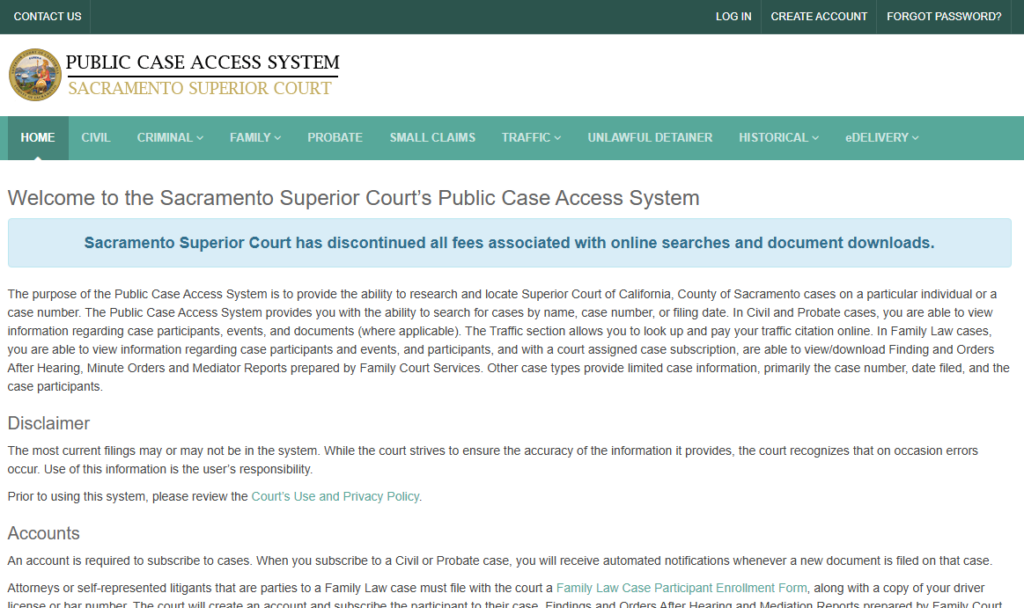
- Wait for the homepage to load
You will see the Sacramento Superior Court Public Case Access System with a top navigation menu. - Choose a case category from the menu
From the top menu bar, select the relevant case type, such as:- Civil
- Criminal
- Family
- Probate
- Small Claims
- Traffic
- Unlawful Detainer
- Open the search options
After clicking a category (for example, Criminal), a dropdown menu will appear.
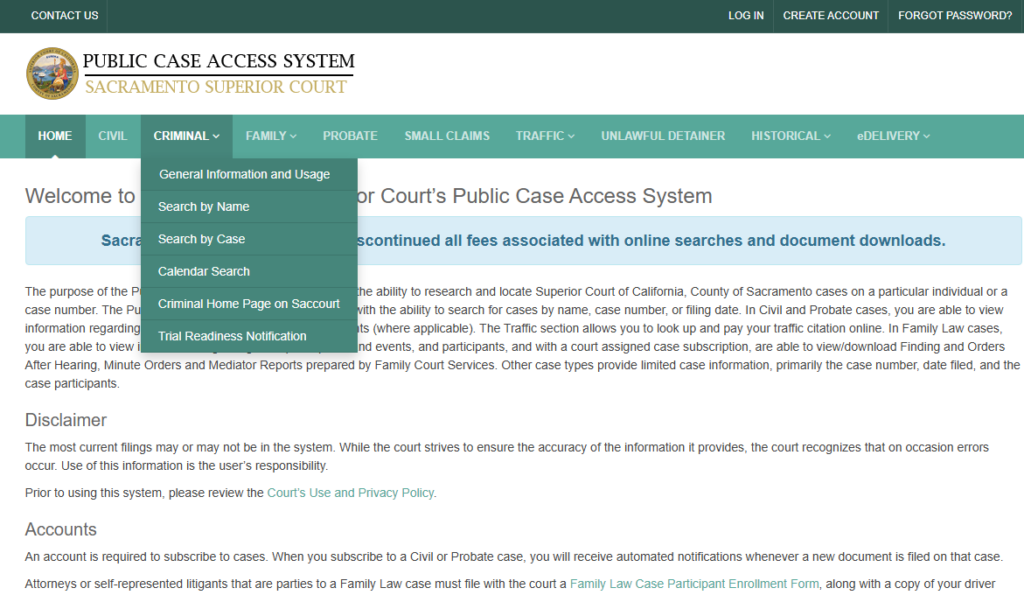
- Select a search method.
From the dropdown, choose one of the available options, such as:- Search by Case Number
- Search by Name
- Calendar Search
- Access the case search tool
Clicking your selected option will open the case search tool page.
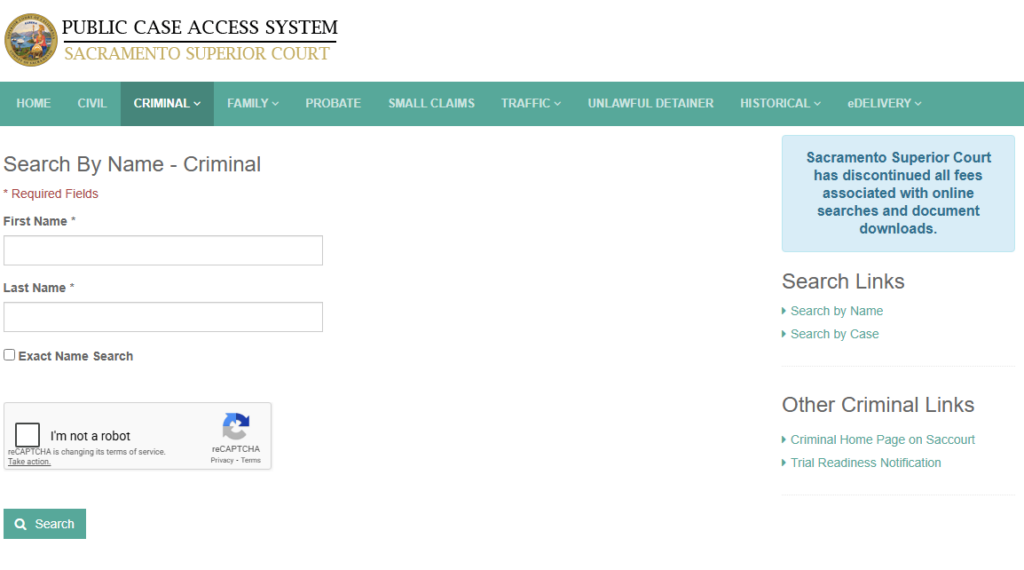
- Enter required case details.
Enter the requested information, such as a case number or party name, into the search fields. - Submit the search
Click the search button to view available case records and details.
Sacramento County Superior Court
The Sacramento County Superior Court is the main trial court in Sacramento County, handling civil, criminal, family, probate, and other cases. In California, “Superior Court” refers to courts with broad authority to hear most types of cases within a county.
The term Superior Court in California means a court of general jurisdiction. It has the power to hear both civil disputes, like contract issues or personal injury cases, and criminal matters, including misdemeanors and felonies. This makes it the first-level court where most legal matters start in Sacramento County.
Why Sacramento County Court Is a Superior Court
Sacramento County’s court system operates under the California judicial branch, and the local courthouse is officially called the Sacramento County Superior Court. Every county in California has a Superior Court, which distinguishes it from limited jurisdiction courts, such as municipal or justice courts.
The Superior Court designation signals that the court can handle:
- Criminal prosecutions for felonies and serious misdemeanors
- Civil lawsuits of almost any value
- Family law matters, including divorce, custody, and support
- Probate cases like wills, estates, and guardianships
- Juvenile cases and dependency hearings
By covering all these case types, the Sacramento County Superior Court serves as the primary judicial authority for residents, businesses, and local agencies in the county.
Judicial Authority and Responsibilities
Judges in the Sacramento County Superior Court carry significant responsibilities. They:
- Preside over trials, ensuring proper application of California law.
- Rule on motions, hearings, and procedural matters.
- Issue judgments, sentencing, and other court orders.
- Oversee mediation and alternative dispute resolution in civil matters.
- Maintain fairness and transparency in court proceedings.
The court also manages administrative functions like case scheduling, maintaining records, and providing public information about court procedures. This ensures that Sacramento County residents can rely on a predictable and organized legal process.
Types of Cases Handled by Sacramento County Court
Sacramento County Court handles a wide range of legal matters, including civil, criminal, family, probate, and traffic cases. Each type of case follows specific procedures to ensure fair hearings, timely resolutions, and lawful outcomes for residents and legal professionals.
Civil Cases
Civil cases involve disputes between individuals, businesses, or organizations, usually over money, property, or contracts. The court resolves lawsuits, property disagreements, personal injury claims, and small claims matters, providing remedies such as compensation or court-ordered actions. Civil litigation begins with filings and responses, often progressing to hearings or trials, and the court encourages mediation to help parties settle disputes efficiently while protecting legal rights.
Criminal Cases
Criminal cases involve violations of state or local laws and are prosecuted by the government. Sacramento County Court handles a wide range of criminal matters, including both misdemeanors and felonies.
Examples of criminal cases include:
- Felonies such as robbery, assault, or fraud
- Misdemeanors like petty theft, DUI, or vandalism
- Preliminary hearings and arraignments for defendants
The court oversees criminal proceedings, ensuring defendants receive a fair trial while victims have their rights protected. Criminal cases may involve plea agreements, bench trials, or jury trials. Judges also manage sentencing, probation, and compliance with restitution orders. Maintaining clear schedules and consistent procedures helps the court handle complex criminal matters efficiently.
Family Law Cases
Family law cases address legal issues affecting families and children. Sacramento County Court manages matters including divorce, child custody, support, and domestic violence protection orders.
Key family law cases include:
- Divorce filings and asset division
- Child custody and visitation arrangements
- Spousal or child support enforcement
- Adoption and guardianship proceedings
Family court focuses on the best interests of children and fair outcomes for adults. Mediation services are often offered to reduce conflict and help families reach agreements outside formal hearings. Judges in family law cases evaluate evidence, apply state law, and issue orders to resolve disputes while prioritizing safety and fairness.
Probate Cases
Probate cases involve the distribution of assets after death, as well as guardianship appointments, estate administration, and will validation. Sacramento County Court oversees the execution of wills, the appointment of executors, the settlement of debts, and the distribution of property among heirs. By managing hearings and filings, the court ensures disputes are minimized, debts are addressed, and beneficiaries receive assets according to legal requirements.
Traffic & Minor Offenses
Traffic and minor offense cases include moving violations, citations, DUI hearings, and local ordinance disputes. Sacramento County Court handles these matters to enforce safety and compliance with the law, providing hearings, diversion programs, or fines as appropriate. Efficient resolution of these cases helps maintain public order while keeping court resources available for more serious legal matters.
Sacramento County Court Services Available to the Public
Sacramento County Court provides a variety of court services to assist residents with legal matters. These services include filing cases, accessing self-help resources, and support from court staff for smooth case management. The court’s primary role is to ensure that legal processes are handled efficiently and fairly. Residents can interact directly with the court through several key services that address different legal needs. Understanding what the court offers helps individuals complete tasks quickly and reduces potential delays in case processing.
Case Filing Services
Filing legal documents is a core function of the Sacramento County Court. The court accepts a wide range of filings, including:
- Civil cases such as small claims, contracts, and personal injury
- Family law cases, including divorce, child custody, and support
- Criminal filings initiated by the District Attorney or defense attorneys
The court provides forms and instructions at the clerk’s office, allowing residents to submit filings in person, by mail, or through approved online portals. Staff can assist with basic questions about forms and procedures. Timely filing ensures cases move forward without unnecessary delays.
Self-Help Services
Sacramento County Court offers self-help services for individuals who represent themselves in legal matters. These services include:
- Legal information about court procedures and filing requirements
- Workshops and guidance on completing forms accurately
- Referrals to community resources for mediation or legal aid
These resources help individuals prepare documents correctly and understand procedural steps, which can improve outcomes and reduce confusion during hearings.
Clerk and Interpreter Services
The clerk’s office serves as the main point of contact for public requests, including:
- Issuing certified copies of court records
- Scheduling hearings and paying fines
- Providing general administrative support
Interpreter services are also available for residents who need assistance in languages other than English. This ensures that everyone can participate fully in legal proceedings without language barriers.
Accessing Sacramento County Court Records & Case Information
Sacramento County court records are generally available to the public, and anyone can perform a case lookup online or in person. Some documents, however, have restrictions to protect privacy or sensitive information. Residents and legal professionals can access court records through the county’s case management system or by visiting the court in person. Public records include civil, criminal, probate, and traffic cases. These records provide basic information such as case numbers, filing dates, parties involved, and court decisions. Certain documents, like juvenile records or sealed cases, remain confidential and cannot be viewed publicly.
Online vs. In-Person Access
Online access offers convenience for quick searches. Sacramento County’s online portal allows users to:
- Look up case information by name, case number, or date.
- View recent court filings and hearing schedules.
- Check the status of active or closed cases.
In-person access at the courthouse provides a more comprehensive option, especially for records not fully available online. Visitors can request:
- Certified copies of judgments or filings.
- Complete case files for civil, criminal, or family court matters.
- Assistance from court clerks for records not easily found in the system.
Common Access Limitations
While many records are open to the public, there are limitations to consider:
- Sealed or confidential cases, including juvenile or sensitive family matters.
- Redacted information, such as Social Security numbers or financial account details.
- Fees for certified copies or extensive record requests.
- Limited hours for in-person access, typically during regular court business hours.
For smooth access, users should have case numbers or party names ready. Using the online portal can save time, but visiting the courthouse may be necessary for older or restricted records. Sacramento County provides resources for public access while balancing legal privacy requirements.
How the Sacramento County Court Process Works
The Sacramento County Court process follows a clear sequence from filing a case to potential appeals. Cases progress through hearings and judgments, with specific procedures depending on the type of legal matter. The court process begins when a case is officially filed with the Sacramento County Superior Court. Filing starts the legal action, whether it’s a civil dispute, criminal charge, or family matter. Each case is assigned a unique case number and scheduled for hearings according to its category. Filing fees and forms are usually required, and documents must meet court standards to proceed smoothly.
Filing a Case
When someone files a case, the court reviews the documents for completeness. The filing can include:
- Civil cases: Complaints or petitions outlining the dispute.
- Criminal cases: Charges filed by the District Attorney.
- Family law matters: Divorce, child custody, or support petitions.
After filing, the court notifies the other party—called the respondent or defendant—who can respond within a specified time. This step formally starts the judicial proceedings and ensures all parties are aware of the case.
Hearings
Hearings allow the judge to evaluate evidence, listen to witnesses, and resolve procedural matters. They may include:
- Initial or arraignment hearings: Introduce the case and address basic procedural issues.
- Pretrial hearings: Discuss evidence, motions, or settlements.
- Trial hearings: Present evidence, witness testimony, and legal arguments for a decision.
Hearings are scheduled according to court rules, and participants must follow strict timelines and requirements. Sacramento courts often provide public calendars for tracking hearing dates.
Judgments
After hearings, the judge issues a judgment or ruling. Civil judgments may include damages, injunctions, or orders, while criminal judgments may involve fines, probation, or sentencing. Family law judgments cover custody, support, or property division.
Appeals Overview
If a party disagrees with the judgment, they may file an appeal to a higher court. Appeals review whether the lower court applied the law correctly, but typically do not re-examine all evidence. Filing an appeal has strict deadlines and procedural rules, often requiring legal guidance.
Sacramento County Court vs Other California Courts
Sacramento County Court is a trial-level court that handles most local civil, criminal, and family cases, while other California courts, like the appellate or Supreme Courts, review decisions from lower courts. This distinction determines how cases move through the state’s judicial system. As part of California’s judicial hierarchy, the Sacramento County Court is a Superior Court, meaning it serves as the first point of entry for legal disputes. Cases here often involve evidence presentation, witness testimony, and initial rulings.
In comparison:
- Appellate Courts focus on reviewing legal errors from trial courts. They do not hold trials or hear new evidence.
- The California Supreme Court handles select cases with broad legal impact, typically involving state law interpretation.
Sacramento County Court deals with a wide range of matters: civil lawsuits, criminal prosecutions, probate issues, and family law cases. Its decisions can be appealed to the California Court of Appeals, which ensures trial rulings comply with legal standards.
Key differences include:
| Court Type | Role | Case Examples | Decision Scope |
|---|---|---|---|
| Sacramento County Court | Trial Court | Traffic tickets, divorces, civil disputes | Initial judgment |
| California Court of Appeal | Appellate Court | Appeals from trial courts | Reviews legal errors |
| California Supreme Court | Highest State Court | High-profile or constitutional cases | Sets binding precedent |
This structure clarifies why the Sacramento County Court handles day-to-day legal matters while higher courts oversee appeals and statewide legal interpretation. Residents rely on the county court for direct legal actions, filings, and hearings, making it a cornerstone of local justice administration.
Sacramento County Court Locations & Courthouses
Sacramento County has multiple courthouse locations, each serving specific types of cases. Knowing which courthouse to contact can save time and help residents reach the correct court services. Sacramento County operates several courthouses throughout the region, ensuring that civil, criminal, family, and traffic matters are handled efficiently. These facilities are spread across the county to serve different neighborhoods, making it easier for residents to access court services close to home.
Main Sacramento County Courthouse
- Address: 720 9th Street, Sacramento, CA 95814
- Phone: (916) 874-6011
- Email: maincourt@saccourt.ca.gov
- Case Types: Civil, Criminal, Probate, Small Claims
This downtown courthouse handles most legal matters and serves as the central hub for Sacramento County.
Family Law Courthouse
- Address: 3341 Power Inn Road, Sacramento, CA 95826
- Phone: (916) 875-6726
- Email: familycourt@saccourt.ca.gov
- Case Types: Divorce, Child Custody, Domestic Violence
This facility is dedicated to family-related cases and offers mediation and support programs for families.
Traffic & Small Claims Court
- Address: 3341 Power Inn Road, Sacramento, CA 95826
- Phone: (916) 875-6716
- Email: trafficcourt@saccourt.ca.gov
- Case Types: Traffic Violations, Parking Tickets, Small Civil Claims
Neighborhood-focused locations make it easier for residents to handle minor disputes and traffic matters.
Juvenile Court
- Address: 9605 Kiefer Blvd, Sacramento, CA 95827
- Phone: (916) 875-9750
- Email: juvenilecourt@saccourt.ca.gov
- Case Types: Juvenile Delinquency, Dependency, Child Protection
This courthouse provides specialized services for youth and families, handling cases involving minors.
Frequently Asked Questions About Sacramento County Court
Sacramento County Court handles a wide range of legal matters, including civil disputes, criminal cases, family law, and probate issues. It provides public services such as case filing, document review, and courtroom access, helping residents manage legal proceedings efficiently.
What cases does the Sacramento County Court handle?
Sacramento County Court manages civil, criminal, family law, probate, and traffic cases, serving as the local venue for these legal matters. Civil cases include disputes between individuals or businesses, such as contract disagreements or personal injury claims, while criminal cases range from misdemeanors to felonies. Family law matters, including divorce, child custody, and support issues, are also handled, alongside probate cases related to wills, trusts, and estate administration. Traffic infractions and small claims involving limited monetary amounts are resolved through the court as well. The court forms, filing fees, and schedules, and the clerk’s officeares available to assist with procedural questions, ensuring filings meet local requirements.
Is Sacramento County Court the same as Superior Court?
Sacramento County Court is part of the Superior Court of California, County of Sacramento, which serves as the main judicial system for the entire county. While “Superior Court” refers to the countywide system, “Sacramento County Court” identifies the specific local jurisdiction. The court handles civil and criminal trials, family law matters, probate cases, traffic violations, and small claims, providing residents with a clear and organized system for managing legal proceedings. This setup ensures that individuals know where to file cases and how each matter is processed within the county.
Can I access court records online?
Many Sacramento County Court records are accessible online, depending on the type of case and privacy regulations. Civil, criminal, and traffic case information can often be viewed through the court’s official case search system, though certain documents, such as sealed criminal files or adoption records, are restricted to protect privacy. Public records like case dockets, court calendars, and filed motions are usually available for viewing, while certified copies may require a formal request through the clerk’s office and may involve a fee. Online access allows residents to track court dates, review filings, and prepare for hearings without visiting the courthouse in person, offering convenience and transparency for eligible records.
Where do I file my case?
The filing location for a case in Sacramento County Court depends on the type of matter. Civil and small claims cases are typically submitted at the civil clerk’s office within the courthouse, family law petitions go to the family law division, probate and estate cases are filed at the probate department, and criminal or traffic cases may be filed at the criminal clerk’s office or referred through law enforcement. Filing generally requires submitting forms, paying applicable fees, and providing supporting documents. Court staff are available to guide residents on proper procedures, ensuring that cases are filed correctly and proceed according to local rules.
Are all court documents public?
Not all court documents in Sacramento County Court are available to the public. Public access generally includes case summaries, dockets, court calendars, and judgments, which allow transparency in legal proceedings. However, certain records are restricted for privacy reasons, such as juvenile cases, sealed criminal files, adoption records, and sensitive family law documents. These rules balance the public’s interest in transparency with the need to protect individuals’ private information. Court staff can clarify which documents are accessible and how residents can obtain copies of permitted records.